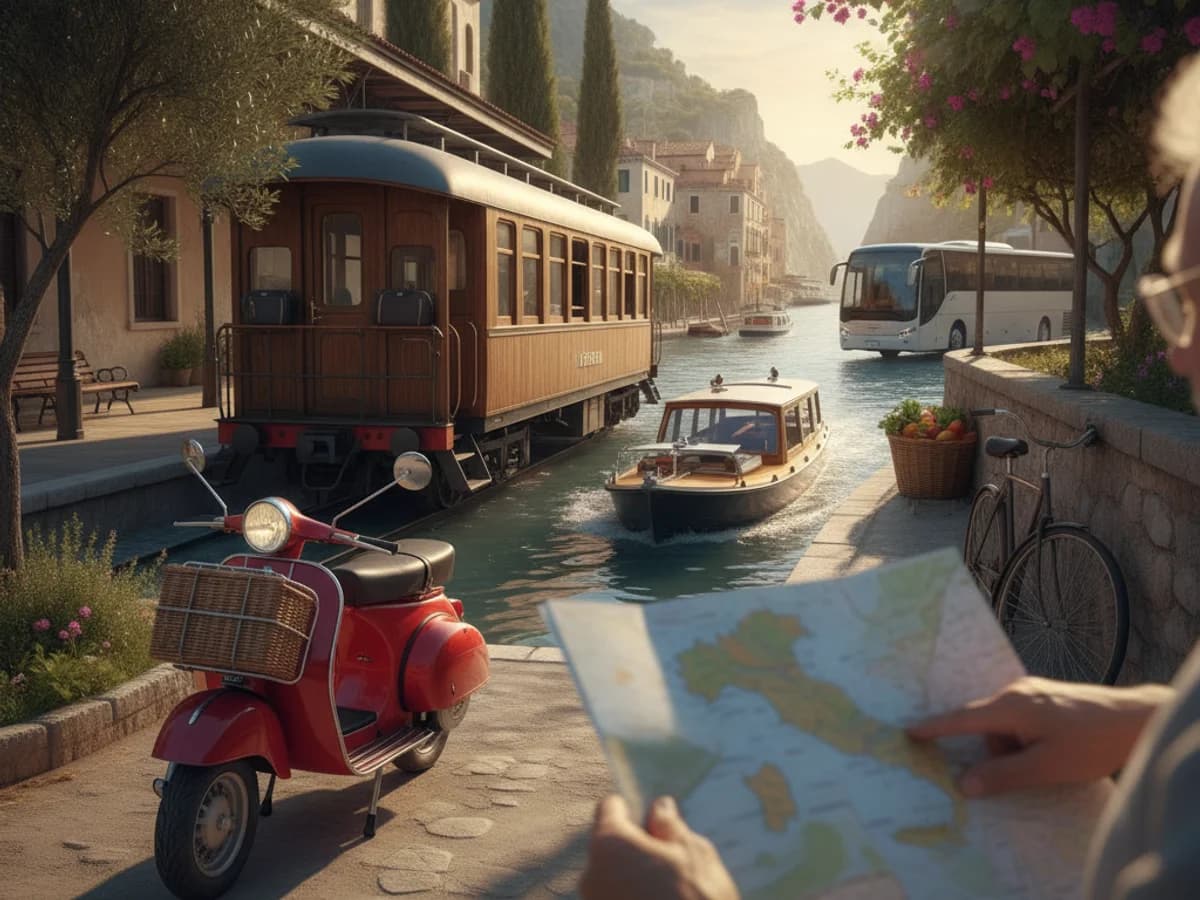

Italy rewards those who explore it. Whether you're traveling between cities, visiting local markets, or planning weekend getaways to the coast, knowing how to navigate Italy's transport network will transform your retirement experience — and save you a surprising amount of money.
⚠️ Important Information
This article is provided for informational purposes only and does not constitute legal, tax, or financial advice. Consult a qualified professional for your personal situation.
Italy has one of Europe's most extensive public transport systems, from high-speed trains linking major cities in under 2 hours to local buses that reach hilltop villages most tourists never discover. As a retiree, you'll have access to a range of discounts, senior cards, and regional passes that make regular travel genuinely affordable. This guide breaks down every major transport option available to you, with practical tips on booking, pricing, and avoiding common pitfalls.
📌 Key Takeaways
- Trenitalia and Italo offer significant senior discounts on intercity and high-speed rail
- Regional trains and local buses are often extremely cheap — sometimes under €2
- Senior cards (Carta Argento) can pay for themselves in just 2-3 trips
- Ferries connect mainland Italy to islands including Sicily, Sardinia, and the Aeolian Islands
- Renting or owning a car remains useful in rural areas with limited public transport
Italy's Rail Network: The Backbone of Retiree Travel
Italy's national rail operator, Trenitalia, runs services ranging from ultra-fast Frecciarossa trains to slower regional Regionale services. The competing private operator Italo covers major intercity routes and often offers competitive pricing when booked in advance.
High-speed Frecciarossa trains connect Rome, Milan, Florence, Bologna, Naples, and Venice — with journey times that are genuinely impressive. Rome to Florence takes around 1h30, Rome to Naples under 70 minutes. For day trips and weekend escapes, this makes a huge difference.
Regional trains (marked "RE" or "R" on Trenitalia's website) serve smaller towns and coastal routes at a fraction of the cost. A regional ticket often costs €3–€8 for journeys under 60 minutes. These trains are slower but perfectly adequate for unhurried retiree travel.
The Carta Argento: Italy's Best Senior Rail Deal
The Carta Argento is Trenitalia's dedicated discount card for passengers aged 60 and over. At €30 per year (as of 2026), it unlocks a 15% discount on high-speed trains and 50% off Intercity services. Frequent travelers typically recover the cost in 2-3 long-distance journeys.
To obtain the card, visit any Trenitalia ticket office with your passport or residency permit. The card is valid for 12 months and linked to your name — it cannot be transferred.
💡 Good to know
Book Trenitalia tickets at least 7–10 days in advance using the "Super Economy" or "Economy" fare classes. Combined with the Carta Argento discount, these early fares can reduce high-speed train costs by 40–60% compared to full-price walk-up tickets.
Italo, Trenitalia's competitor, does not offer a dedicated senior card but runs frequent promotional fares. Signing up for their Italo Più loyalty program is free and earns points redeemable against future tickets. Always compare prices across both operators before booking.
Buses: Cheap, Local, and Often Overlooked
Local buses (managed by regional operators such as ATAC in Rome, ATM in Milan, or GTT in Turin) are the workhorses of daily life in Italian cities. A single urban ticket costs €1.50–€2.50 depending on the city, and many municipalities offer monthly or annual passes at heavily discounted rates for residents over 65.
For longer intercity routes not served efficiently by rail — particularly in southern Italy and rural Tuscany or Umbria — FlixBus and regional coach operators like Marino or Baltour fill the gap. Tickets frequently cost under €10 for 2-3 hour journeys.
In smaller towns, the local bus timetable can be erratic. Always verify schedules directly with the local comune (municipal office) or at the bus station, as online information is not always updated.
Ferries: Connecting Islands and Coastal Towns
Italy's ferry network is extensive and genuinely enjoyable for retirees who aren't in a rush. Key routes include:
- Naples to Capri (35 minutes by hydrofoil)
- Civitavecchia to Sardinia (overnight ferries, 7–12 hours depending on route)
- Villa San Giovanni to Messina, Sicily (20-minute crossing)
- Piombino to Elba (around 1 hour)
- Naples to the Aeolian Islands (overnight, via Milazzo)
Major ferry operators include Tirrenia, Moby, GNV, and Grimaldi Lines. Booking 4–6 weeks ahead for summer crossings is essential, particularly for routes to Sardinia and Sicily. Off-season, cabins are plentiful and prices drop significantly.
⚠️ Warning
During July and August, ferry crossings to Sardinia and Sicily can sell out weeks in advance. If you plan to travel in peak season, book your cabin and vehicle crossing as early as possible — last-minute availability is extremely limited.
Driving in Italy: When a Car Makes Sense
Public transport is excellent between and within major cities, but rural Italy is a different story. If you're living in a smaller region like Calabria or inland Basilicata, having a car is often a practical necessity for reaching supermarkets, medical appointments, and social activities.
Italy's motorway (autostrada) network is well-maintained but involves tolls. A 300 km drive can cost €15–€25 in tolls alone. The Telepass electronic toll device (available from Telepass.com, starting at around €3/month) allows you to pass through toll gates without stopping — extremely convenient for regular motorway users.
If you drive a car registered in a non-EU country, be aware of specific rules around re-registering vehicles in Italy. Our complete guide to driving in Italy as a retiree covers license conversion, ZTL zones, and vehicle registration in full detail.
Taxis and Ride-Hailing Apps
Licensed taxis in Italy are metered and regulated by each municipality. In Rome, a typical airport-to-center taxi costs a fixed €50 (from Fiumicino). In smaller cities, fares are more modest — expect €8–€15 for most urban journeys.
Uber operates in Italy in a limited capacity (primarily UberBlack, using licensed drivers), but traditional taxis dominate. The itTaxi and FREE NOW apps allow you to book official taxis via smartphone — a far more convenient option than hailing one on the street.
In rural areas, taxis are scarce. Identify your local taxi driver early after arriving, as they often become a reliable resource for medical appointments and airport transfers.
Transport Costs at a Glance
| Transport Type | Typical Cost | Senior Discount Available? | Best For |
|---|---|---|---|
| Frecciarossa (high-speed train) | €25–€90 (advance booking) | Yes — Carta Argento (15%) | Rome–Milan, Rome–Florence, Rome–Naples |
| Intercity train | €15–€40 | Yes — Carta Argento (50%) | Medium-distance city pairs |
| Regional train | €2–€12 | Varies by region | Local towns, coastal routes |
| Urban bus (single ticket) | €1.50–€2.50 | Yes — monthly passes for residents | Daily city errands |
| Long-distance coach (FlixBus) | €5–€25 | No dedicated senior rate | Budget intercity travel |
| Ferry (mainland to Sardinia) | €40–€120 per person | Occasional promotional rates | Island travel and holidays |
| Taxi (urban trip) | €8–€20 | No | Door-to-door convenience |
Practical Tips for Stress-Free Travel in Italy
Planning your trips in advance makes an enormous difference in Italy. Here are the habits that experienced retiree expats develop quickly:
- Download the Trenitalia and Italo apps on your smartphone — both allow mobile ticketing and real-time journey updates
- Keep a printed copy of your Carta Argento and travel bookings if you're less comfortable with digital-only tickets
- Validate your ticket before boarding regional trains — the yellow validation machines on platforms are not optional, and inspectors issue fines of €50+ for unvalidated tickets
- For urban transport, buy a carnet (book of 10 tickets) rather than single tickets — it's consistently cheaper in cities like Rome, Florence, and Naples
- Check whether your municipality offers a free or reduced-cost annual bus pass for residents over 65 — many do, but you must apply in person at the local office
Frequently Asked Questions
Can I use my European senior rail card in Italy?
Italy is part of the Eurail network, and the Eurail Senior Pass (for travelers aged 60+) provides unlimited travel on Trenitalia services for set periods. However, high-speed trains require a mandatory seat reservation (€10–€13 extra per journey even with a pass). For residents planning regular domestic travel, the Carta Argento usually offers better value than Eurail.
Do Italian cities offer free public transport for retirees?
A small number of Italian municipalities offer free urban transport for low-income residents over 65, but this is not universal. Most cities offer reduced-rate annual passes for residents with residency registration (residenza). Check with your local comune after completing your registration to see what you qualify for.
How do I get around if I live in a rural area without a car?
Rural mobility in Italy can be genuinely challenging. Many retirees in rural areas combine occasional car rental, local taxi relationships, and neighbor networks for essential journeys. Some regions operate on-demand rural bus services — ask your comune about "trasporto a chiamata" (dial-a-ride) services, which exist in parts of Tuscany, Umbria, and Emilia-Romagna.
Is it safe to travel by train alone as an older retiree?
Italy's major rail routes are generally safe and well-staffed. On busier routes like Rome–Naples or Milan–Venice, keep your bags within sight and be cautious of pickpockets at major stations (Roma Termini and Milano Centrale in particular). Traveling during daylight hours and keeping valuables secure is common-sense precaution rather than anything specific to Italy.
What is the ZTL and how does it affect drivers?
ZTL stands for Zona a Traffico Limitato — restricted traffic zones in city centers. Driving into a ZTL without authorization triggers an automatic fine (typically €80–€160), detected by cameras. If you're driving to a city center hotel, always confirm whether they can arrange temporary ZTL authorization for guests. Our driving guide for retirees in Italy covers ZTL zones in detail.
Conclusion
Italy's transport network is more accessible, affordable, and senior-friendly than many retirees expect. With the right cards, apps, and advance planning habits, you can move around the country confidently — from weekly market trips to cross-country adventures — without relying entirely on a car. Take time during your first weeks to register for municipal discounts, obtain your Carta Argento, and map out your local transport options. The freedom to explore is one of retirement's great pleasures, and in Italy, the journey really is half the experience.
Ready to plan your move? Explore our complete guide to retiring in Italy for everything you need to know before you arrive.