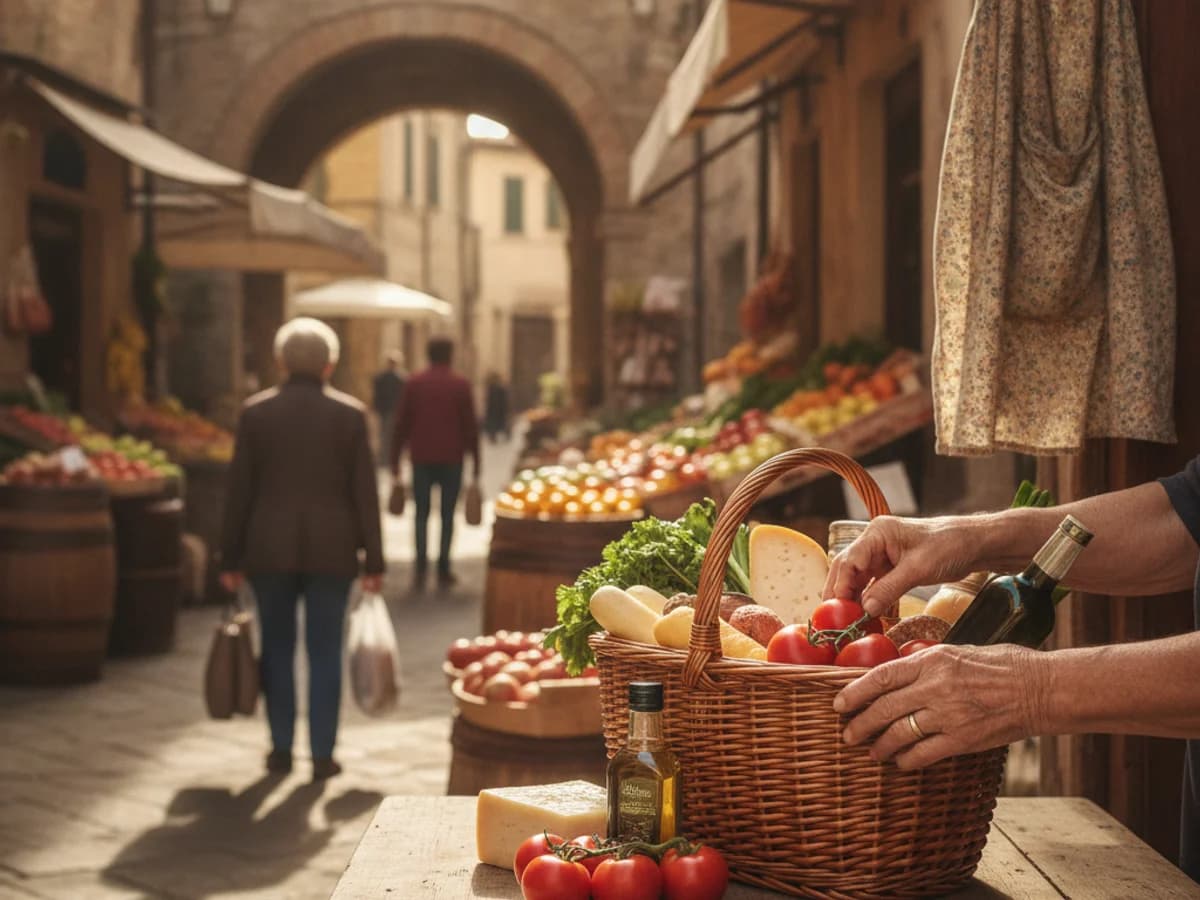

Grocery shopping in Italy as a retiree is one of the most rewarding parts of daily life — and one of the most confusing at first. Between bustling outdoor markets, family-run specialty shops, and modern supermarket chains, knowing where to buy what (and at what price) can take months to figure out on your own.
⚠️ Important Information
This article is provided for informational purposes only and does not constitute legal, tax, or financial advice. Consult a qualified professional for your personal situation.
This guide breaks down every channel available to retirees living in Italy — from the local mercato to discount supermarkets — so you can eat well, spend wisely, and embrace one of Italy's greatest everyday pleasures from day one.
📌 Key Takeaways
- Italy's food retail system mixes supermarkets, street markets, and specialty shops — each with a distinct role
- Weekly outdoor markets (mercati) often offer the freshest produce at the lowest prices
- A couple can eat very well on €300–€450/month in groceries depending on the region
- Learning a few Italian food terms and shopping habits makes integration dramatically easier
- Discount chains like Lidl, Eurospin, and MD are popular with budget-conscious expats
Understanding Italy's Food Retail Landscape
Italy does not operate on a one-stop-shop model. Most Italians still divide their shopping across several types of stores, each specializing in something different. As a retiree, understanding this structure helps you shop smarter and integrate into local rhythms more naturally.
The main retail formats you'll encounter are:
- Supermercato — standard supermarkets (Conad, Coop, Esselunga, Carrefour)
- Ipermercato — large hypermarkets, usually on city outskirts
- Discount stores — budget chains like Eurospin, Lidl, MD, and Penny
- Mercato rionale — weekly or daily outdoor neighborhood markets
- Negozi specializzati — specialty shops: butcher (macellaio), fishmonger (pescivendolo), deli (salumeria), bakery (panificio)
- Alimentari / drogheria — small local grocery stores, often family-run
Each plays a role. Most expat retirees develop a hybrid routine within a few months, combining 2 or 3 of these formats for maximum quality and value.
Supermarkets: The Reliable Backbone
For everyday shopping — cleaning products, pantry staples, dairy, frozen goods — Italian supermarkets are perfectly adequate and widely available even in small towns.
Conad and Coop are the most widely spread cooperative chains. They offer solid quality, frequent promotions, and loyalty cards worth using. Esselunga is considered a premium chain, mainly in northern Italy, with excellent fresh sections and reliable import products (useful if you miss certain items from home).
Carrefour and Pam cover mid-range urban needs. Their international food aisles are often larger than Italian-owned chains, which can be helpful in the early months of your move.
For budget-focused shopping, Lidl Italy operates 700+ stores nationwide and is widely popular even among middle-class Italians. Eurospin is the Italian-born discount leader and offers remarkably good value on pasta, olive oil, legumes, and canned goods. MD and Penny round out the discount sector in central and southern regions.
💡 Good to know
Most Italian supermarkets require a €0.10–0.20 deposit for shopping carts — always carry a 50-cent coin or a 1-euro coin when you head out. Reusable bags are standard; plastic bags are charged separately and often not available for produce.
Outdoor Markets: Where Italy Really Shines
No guide to grocery shopping in Italy would be complete without covering outdoor markets. The mercato is a genuine institution — and for retirees with flexible schedules, it's one of the best tools for eating well on a budget.
Most Italian towns hold a weekly outdoor market (mercato settimanale), typically on a fixed weekday morning. Larger cities have daily covered markets (mercati coperti) or permanent open-air markets running 6 days a week.
What you'll find:
- Seasonal fruits and vegetables, often from local farms, at 30–50% less than supermarket prices
- Fresh eggs, honey, and artisan cheeses from regional producers
- Fish stalls in coastal towns — fresher and cheaper than supermarkets
- Olives, dried legumes, nuts, and spices sold in bulk
Arriving early (before 9 a.m.) gives you the best selection. Arriving in the final 30 minutes before closing (usually noon) gives you the deepest discounts as vendors want to clear stock. Both strategies work — depending on your priorities.
For retirees working on their Italian, the market is also one of the best social environments. Vendors are used to patient conversations and repeat customers. As we cover in our learning Italian in retirement guide, regular market visits accelerate language acquisition faster than most formal lessons.
Specialty Shops: Quality Worth Seeking
Italian food culture still centers heavily on dedicated specialty stores, and for good reason — quality is simply higher. A macellaio (butcher) will advise you on cuts, trim meat to order, and recommend preparation methods. A panificio bakes fresh bread daily, often twice a day.
Key shops to locate in your neighborhood:
- Panificio / Forno — fresh bread, focaccia, pizza bianca
- Salumeria / Gastronomia — cured meats, cheeses, prepared dishes
- Macellaio — butcher, often with regional specialties
- Pescheria — fishmonger, essential in coastal areas
- Fruttivendolo — fruit and vegetable shop, often cheaper than supermarkets
These shops typically close for lunch (1–4 p.m.) and are closed on Sundays. Building relationships with local shopkeepers is genuinely worthwhile — they'll alert you to good seasonal arrivals and often set aside products for regular customers.
Grocery Cost Comparison by Store Type
Understanding price differences between shopping channels helps you build a realistic monthly food budget. The figures below are indicative averages for 2026 across central Italy.
| Item | Discount Supermarket | Standard Supermarket | Outdoor Market | Specialty Shop |
|---|---|---|---|---|
| Tomatoes (1 kg) | €0.89 | €1.40 | €0.70 | €1.80 (heirloom) |
| Pasta (500g, dry) | €0.55 | €0.99 | N/A | €2.50 (artisan) |
| Olive oil (750ml, extra virgin) | €3.90 | €5.80 | €6.00 (farm direct) | €9.00 (DOP) |
| Chicken breast (1 kg) | €5.50 | €7.20 | €6.50 | €9.00 (free-range) |
| Mozzarella di bufala (250g) | €2.20 | €3.40 | €2.80 | €4.50 (DOP) |
| Red wine (750ml, table) | €1.90 | €3.50 | N/A | €6.00+ (DOC) |
As you can see, a strategic mix of discount supermarkets for shelf staples and outdoor markets for fresh produce delivers the best value. This aligns with what we outline in our detailed cost of living guide for retirees in Italy.
Regional Differences That Matter
Italy's food culture is intensely regional, and grocery shopping reflects this. What's cheap and abundant in Sicily may be rare and expensive in Trentino, and vice versa.
- Southern Italy (Campania, Sicily, Puglia): Lower food costs overall, exceptional fresh produce, excellent seafood. Outdoor markets are larger and cheaper.
- Northern Italy (Lombardy, Piedmont, Veneto): Higher living costs, but also more international supermarkets and greater availability of imported goods.
- Central Italy (Tuscany, Umbria, Lazio): Mid-range costs, strong artisan food culture, excellent olive oil and wine direct from producers.
- Islands (Sardinia, Sicily): Some imported goods cost more due to logistics. Local seasonal produce is outstanding and very affordable.
If you're still deciding where to settle, our best regions to retire in Italy guide covers how food culture and cost of living vary across the country in detail.
Practical Tips for Your First Weeks
Getting comfortable with grocery shopping in a new country takes a few weeks. These habits will accelerate the process:
- Download the Lidl Plus and Conad loyalty apps before your first big shop — both offer digital coupons
- Ask your landlord or neighbor which day the local mercato runs — this is often not posted online
- Keep a small vocabulary list of food terms on your phone (especially cuts of meat and fish names)
- Bring your own bags every time — this quickly becomes automatic and is expected
- Check expiry dates carefully; Italian stores rotate stock less aggressively than some northern European countries
⚠️ Warning
Many Italian supermarkets and specialty shops are closed on Sunday afternoons and all day on certain local holidays. Plan your shopping accordingly, especially in the first weeks after arriving — running out of essentials on a Sunday is a very common expat frustration.
Online Grocery Delivery in Italy
Online grocery shopping has grown significantly in Italy since 2020. Esselunga offers home delivery across northern and central Italy. Carrefour and Conad run delivery services in major cities. Amazon Fresh is available in Milan and Rome.
For retirees who move to rural or semi-rural areas — which many do for lifestyle and cost reasons — delivery coverage can be limited. In smaller towns, it's worth checking whether a local supermarket offers even a basic click-and-collect service.
Delivery costs typically range from €3 to €6 per order, with free delivery above a €50–€70 threshold depending on the retailer. These services are useful for heavy items (water bottles, wine cases, cleaning products) but most retirees still prefer visiting the market for fresh food.
Frequently Asked Questions
Can I find international food products in Italian supermarkets?
Yes, but availability varies significantly by region and city size. Larger supermarkets like Esselunga and Carrefour carry imported products including British, American, and Asian staples. In smaller towns, selection is much more limited. Online platforms like Amazon.it fill most gaps.
Is tap water safe to drink in Italy?
Yes, tap water (acqua del rubinetto) is safe to drink throughout Italy and is subject to strict EU standards. However, many Italians and expats prefer bottled water for taste reasons, particularly in areas with harder water. Bottled still water (naturale) costs as little as €0.25/1.5L at discount stores.
How do Italian loyalty cards work for retirees?
Most major supermarket chains (Conad, Coop, Esselunga) offer free loyalty cards that accumulate points redeemable for discounts or products. They require an Italian address but not necessarily a codice fiscale at registration. They generate meaningful savings over time — typically 3–7% back on spend.
What payment methods are accepted at outdoor markets?
Cash (contanti) remains dominant at outdoor markets, although many vendors now accept card payments via POS terminals. Carrying €20–€40 in small notes and coins when visiting a market is strongly recommended.
Are organic products available and affordable in Italy?
Organic (biologico) products are widely available in Italian supermarkets, particularly Coop, Carrefour Bio, and Esselunga. Prices are typically 20–40% higher than conventional equivalents. Farmers' markets (mercati dei contadini) sometimes offer locally grown organic produce at more competitive prices than supermarkets.
Conclusion
Grocery shopping in Italy quickly becomes one of the most enjoyable aspects of expat retirement life. The combination of outstanding local produce, affordable seasonal ingredients, and a rich food culture means that eating well in Italy does not have to be expensive — but it does reward those who learn the system.
Start with a mix of your nearest supermarket and the weekly outdoor market. Identify your local specialty shops over the first few weeks. Build the habit gradually, and within 2–3 months, shopping will feel natural rather than challenging.
For a complete picture of your monthly expenses in Italy, explore our realistic budget guide for retirees, or head to our full retirement guide to plan every dimension of your move.