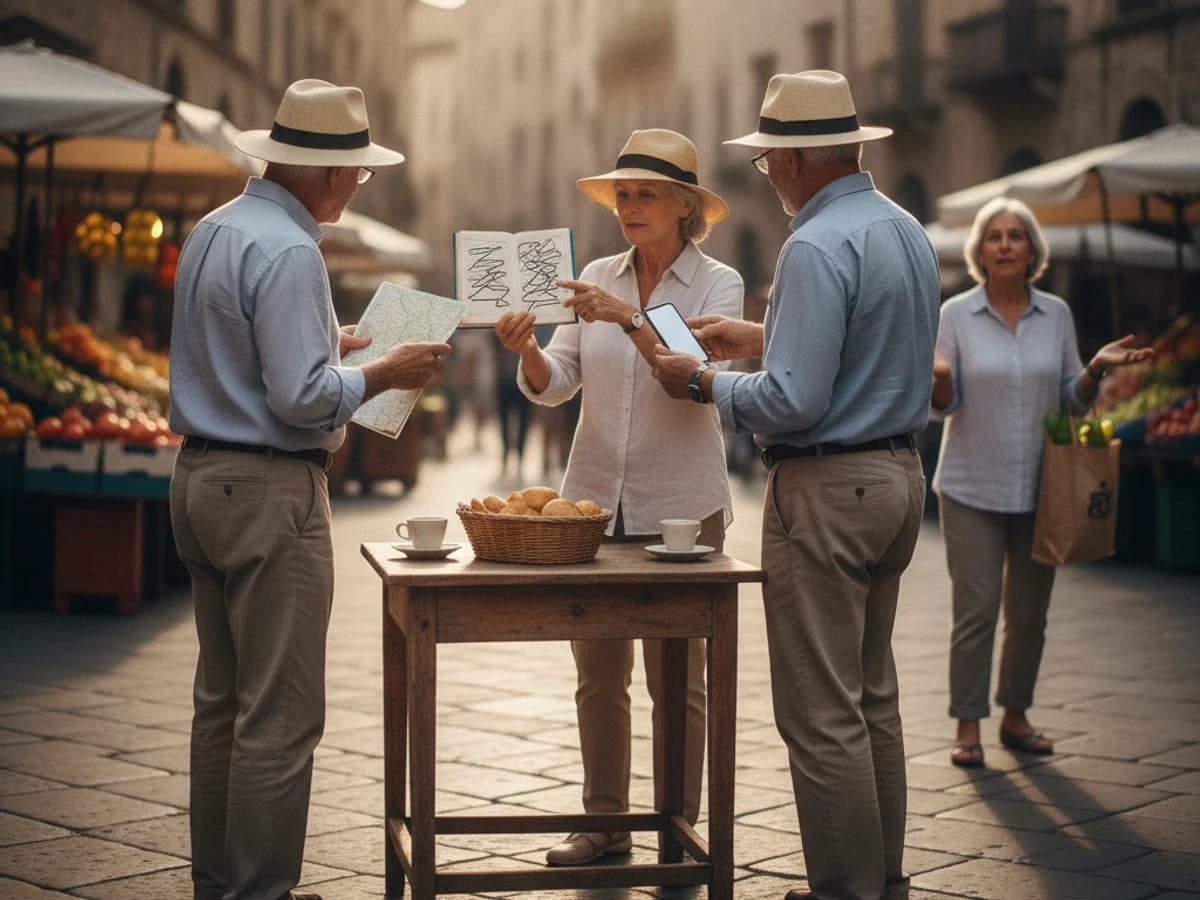

Moving to Italy without fluent Italian is entirely possible — and thousands of retirees do it every year. The real question isn't whether you'll manage, but where the language barrier will bite hardest and how to prepare before it does. From grocery runs to hospital appointments, knowing which situations require Italian — and which workarounds exist — makes the difference between frustration and genuine enjoyment of la dolce vita.
⚠️ Important Information
This article is provided for informational purposes only and does not constitute legal, tax, or financial advice. Consult a qualified professional for your personal situation.
📌 Key Takeaways
- Most urban and tourist-heavy areas have English-speaking support, but rural Italy is significantly harder to navigate without Italian
- Healthcare is the highest-stakes environment where language barriers matter most — preparation is essential
- Translation apps and bilingual professionals reduce friction dramatically in administrative situations
- Even basic Italian (50–100 words) improves daily interactions and earns significant goodwill from locals
- Building a mixed expat-Italian social network is the single most effective long-term solution
Where the Language Barrier Actually Hurts Most
Not all situations are equal. A café order is forgiving. A conversation with your GP about a new prescription is not. Understanding where friction peaks helps you prioritise your preparation time wisely.
The toughest environments for non-Italian speakers fall into 4 main categories: healthcare, public administration, legal or financial appointments, and rural commerce. In each of these, the stakes are higher, the vocabulary is specialised, and the margin for misunderstanding is costly.
Urban centres like Milan, Rome, Florence, and Bologna have a much higher density of English-speaking professionals. Smaller towns — particularly in Sicily, Calabria, Basilicata, and inland Sardinia — often have almost none. If you're drawn to quiet rural living (as many retirees are), factor language access into your location decision alongside cost and climate.
Healthcare: The Situation That Requires the Most Preparation
Navigating the Italian National Health Service (SSN) without Italian is manageable but demands advance planning. Most GPs (medici di base) in smaller towns speak limited English. Specialists in larger hospitals are more likely to have some English, but it's not guaranteed.
Your best options are:
- Register with a bilingual GP (search expat forums and Facebook groups for recommendations by region)
- Use the European Health Card or private insurance that provides a 24/7 phone translation service
- Bring a bilingual friend or hire a "patient advocate" for complex appointments
- Prepare a written medical summary in Italian before your first consultation — ChatGPT or DeepL can produce a solid draft that a professional can polish
Our full guide on Italian healthcare for retirees covers SSN registration step by step, including how to find an English-friendly GP in major regions.
⚠️ Warning
Never rely solely on machine translation for medical or legal documents. Errors in dosage, symptoms, or legal terms can have serious consequences. Always have critical documents reviewed by a certified translator or bilingual professional.
Public Administration: Italian Is (Almost) Non-Negotiable
Getting your codice fiscale, registering at the Comune, or renewing your permesso di soggiorno — these processes are conducted almost entirely in Italian. Offices rarely have English-speaking staff, and the paperwork is in Italian by default.
There are 3 realistic solutions:
- Hire a patronato or CAF office: These are semi-public assistance centres (often affiliated with unions) that help individuals with administrative paperwork. Many handle expat cases regularly and can act as intermediaries.
- Use a commercialista (accountant/tax advisor): Essential for tax matters, and most who work with expats speak English. They handle filings, correspondence, and appointments on your behalf.
- Bring a bilingual helper: A local friend, expat community contact, or paid interpreter accompanies you to offices.
The administrative procedures guide for Italy walks through each step of the main bureaucratic processes, with notes on which ones require in-person Italian communication.
Daily Commerce: Easier Than You Think
The good news: daily shopping, dining, and service interactions are far more manageable than administrative situations. Supermarkets require almost no language at all. Markets need basic numbers and polite phrases. Restaurants in tourist areas default to English menus.
Where things get trickier:
- Artisans, tradespeople (plumbers, electricians) — technical vocabulary, no Google Translate patience
- Post offices (Poste Italiane) — notoriously slow and occasionally confusing even for Italians
- Regional health specialists in rural clinics
Learning 50–100 key Italian words and phrases — numbers, greetings, food vocabulary, basic question forms — reduces friction across all of these significantly. Even imperfect Italian opens doors and earns warmth that English alone rarely does.
💡 Good to know
Italians respond exceptionally well to the effort of trying their language, even poorly. A mispronounced "mi scusi, parla inglese?" will get you further than launching directly into English. The gesture matters more than the accuracy.
Technology Tools That Genuinely Help
Translation technology in 2026 is good enough to handle most daily situations that aren't medically or legally critical. Here's a realistic breakdown of what works:
| Tool | Best Use Case | Reliability | Cost |
|---|---|---|---|
| Google Translate (camera mode) | Menus, signs, packaging labels | High for common text | Free |
| DeepL | Written documents, emails, letters | Very high for European languages | Free / Pro €8.74/mo |
| Google Translate (voice) | Simple real-time conversations | Moderate — accent-sensitive | Free |
| iTranslate Converse | Two-way spoken dialogue | Moderate — quiet environments only | ~€9.99/mo |
| Certified human translator | Legal, medical, official documents | High | €30–80/hour |
For anything involving contracts, medical history, or legal rights, always escalate to a certified human translator (traduttore giurato). The cost is modest relative to the risk.
Building a Support Network Is Your Real Long-Term Strategy
No app or dictionary replaces having people around you who bridge languages naturally. Most retirees who thrive in Italy without fluent Italian have built a small, reliable network within their first 6–12 months.
This network typically includes:
- 1 bilingual local contact (neighbour, shopkeeper, or community acquaintance who becomes a trusted friend)
- An expat community connection — Facebook groups like "Americans/British/Canadians in [region]" are active and genuinely useful
- A commercialista and/or a bilingual GP
- 1 reliable translator for occasional formal needs
The social life and expat community guide covers exactly how to build this network in practical terms, including which organisations and platforms are most effective by region.
Investing in even 3–6 months of structured Italian lessons also pays compound returns. You don't need fluency — you need functional confidence in the 10–15 situations you'll encounter weekly. Apps like Babbel or Duolingo work for vocabulary building; in-person classes build speaking confidence far faster.
Regional Differences: Where English Goes Further
Location shapes your experience of the language barrier as much as personal preparation does. Here's a general pattern:
- Northern cities (Milan, Turin, Bologna): Strong English presence, especially among under-50 professionals and in the service sector
- Central Tuscany and Umbria: High expat density means services have adapted — English is widely available in many towns
- Rome and Florence: Excellent English coverage in tourist and expat zones; drops sharply outside them
- Southern Italy and islands: Lowest English availability — but also lowest cost of living and highest local warmth. The tradeoff is real.
If language access is a primary concern, shortlisting regions with established expat communities is a logical starting point. Our guide on the best regions to retire in Italy includes language-access considerations for each area.
Frequently Asked Questions
Can I live in Italy long-term without learning Italian?
Yes, many retirees do — particularly in expat-dense areas of Tuscany, Liguria, and Lake Como. However, you'll be more dependent on paid intermediaries for administration and healthcare, and your integration into local life will be shallower. Most retirees report that learning even basic Italian significantly improves their quality of life.
Are there English-speaking doctors in Italy?
Yes, in most cities and tourist regions. The best way to find one is through expat forums, Facebook groups for your specific region, or by asking your embassy for a recommended practitioners list. Some private hospitals also advertise English-language services explicitly.
Do Italian government offices have translation services?
Generally, no. Government offices (Comuni, Questura, ASL health offices) do not provide systematic translation services. You are expected to communicate in Italian or bring your own interpreter. A patronato or CAF office can often handle paperwork on your behalf.
Is Google Translate reliable enough for daily life in Italy?
For low-stakes situations (menus, signs, casual communication), yes — it's very usable. For anything involving legal terms, medical instructions, or official documents, it introduces meaningful risk of error. Use a certified translator for those cases.
How long does it take to reach functional Italian for daily life?
With consistent daily study of 20–30 minutes, most English speakers reach functional conversational Italian in 6–12 months. Apps accelerate vocabulary; speaking practice with locals or a tutor accelerates confidence. A B1 level (intermediate) is sufficient for most daily interactions.
Conclusion
The language barrier in Italy is real, but it's not a dealbreaker — not even close. The retirees who struggle most are those who don't anticipate where friction will appear. The ones who thrive are those who plan ahead: they find a bilingual GP before they need one, they understand which tools work and which don't, and they invest modestly in both language learning and a reliable human support network.
Start with the situations that carry the highest stakes — healthcare and administration — and work outward from there. Daily life, commerce, and social interaction fall into place quickly once those foundations are solid.
Ready to plan your move to Italy in full? Explore our complete guide to retiring in Italy in 2026 for a comprehensive overview of every step, from visa to daily life.