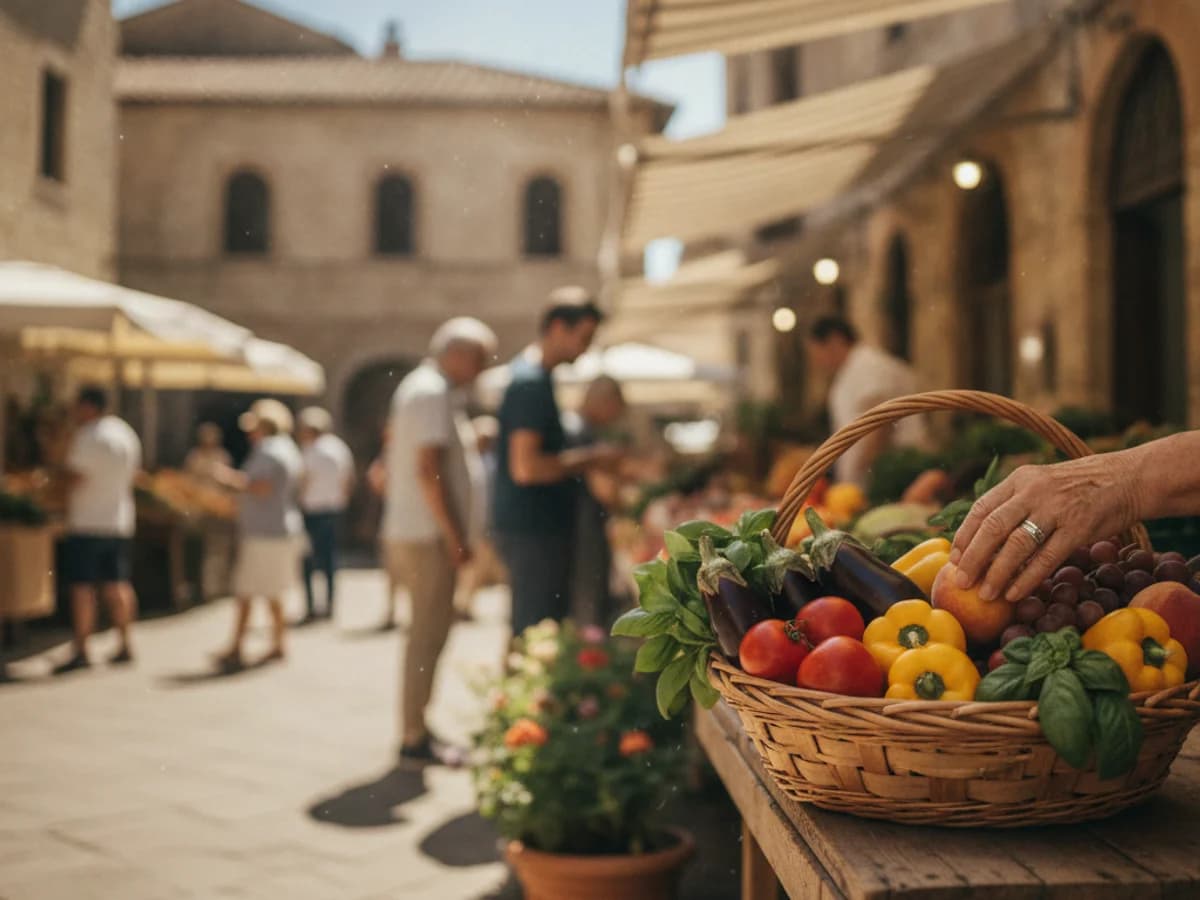

Shopping at local markets is one of the great joys of retiring in Italy. Whether you're hunting for sun-ripened tomatoes, handmade ceramics, or vintage furniture, the Italian mercato offers an experience that supermarkets simply cannot match. For retirees, markets are also a powerful gateway into local culture, a place to practice your Italian, and — perhaps most importantly — a genuine way to cut your weekly grocery bill.
⚠️ Important Information
This article is provided for informational purposes only and does not constitute legal, tax, or financial advice. Consult a qualified professional for your personal situation.
📌 Key Takeaways
- Italy has thousands of outdoor markets, from daily food markets to weekly street fairs and monthly antique fairs
- Prices at local markets are typically 20–40% lower than supermarkets for fresh produce
- Most markets operate in the morning; arriving early gives you the best selection
- Cash is still king at Italian markets — always carry small bills and coins
- Markets are a social hub where retirees can build real connections with locals
Why Local Markets Matter for Retirees in Italy
For anyone managing their cost of living in Italy, the local market is not a tourist attraction — it is a practical financial tool. Seasonal, local produce bought directly from farmers costs significantly less than the same items wrapped in plastic at a supermarket chain.
Beyond the savings, markets offer something harder to quantify: rhythm. In Italy, the weekly market visit is a social ritual. You'll find the same vendors, the same neighbors, the same elderly gentlemen debating the quality of this year's olive harvest. For retirees building a new life abroad, this kind of routine is genuinely valuable.
Markets also vary enormously by type. Understanding the different categories will help you plan your week and your budget effectively.
The Main Types of Italian Markets
Food Markets (Mercati Alimentari)
These are the most common and the most useful for daily life. Every Italian town of any size has at least one outdoor food market, typically held one or two days per week in the main piazza or a dedicated market square.
You'll find seasonal vegetables and fruit, local cheeses, cured meats, fresh pasta, eggs, bread, olives, and fish in coastal towns. The quality is generally excellent, and vendors are often the producers themselves.
Larger cities like Rome, Milan, Florence, and Naples have permanent covered markets (mercati coperti) that operate Monday through Saturday. Rome's Campo de' Fiori and Testaccio Market are famous examples, though prices there reflect tourist footfall. Locals tend to shop at neighborhood markets further from the center.
Weekly Street Markets (Mercati Settimanali)
Almost every Italian village and town hosts a weekly street market that combines food stalls with clothing, household goods, shoes, and accessories. These markets are where ordinary Italians shop, and prices reflect that reality.
For retirees, these markets are an excellent source of affordable linen, kitchen items, socks, and seasonal clothing — the kind of practical purchases that add up quickly if you buy them in boutiques.
Antique and Flea Markets (Mercatini dell'Antiquariato)
Italy's antique markets are world-famous for good reason. The country has an extraordinary density of old furniture, vintage textiles, silverware, books, and curiosities. Monthly antique fairs (mercatini dell'antiquariato) take place in most medium and large towns.
Notable ones include the Porta Portese flea market in Rome (Sunday mornings), the Fiera Antiquaria in Arezzo (first Sunday of each month), and the Gran Mercato dell'Antiquariato in Brescia. These are wonderful places to furnish an apartment affordably and with character — highly relevant if you've recently gone through the process of renting property in Italy.
Farmers' Markets (Mercati Contadini)
Growing in popularity across Italy, farmers' markets (mercati contadini or mercati della terra) connect urban buyers directly with small-scale local producers. Slow Food Italy coordinates many of these through its Mercati della Terra network.
Prices can be slightly higher than standard food markets, but the provenance is transparent and the quality is exceptional. These markets often operate on weekends and are increasingly popular in university towns and wealthier urban areas.
Practical Tips for Shopping at Italian Markets
💡 Good to know
At Italian food markets, it is generally considered impolite to touch the produce before buying. Point to what you want and let the vendor pick it for you — this is the local custom, and respecting it will earn you better service and often a small bonus (a handful of parsley, an extra lemon).
Arrive early. Most outdoor markets open between 7:00 and 8:00 AM and begin winding down by noon. The best selection — and the freshest produce — is available in the first two hours.
Bring your own bags. Plastic bags are increasingly rare and often charged for. A canvas tote or a traditional Italian borsa della spesa (shopping basket) marks you out as a serious shopper, not a tourist.
Carry cash in small denominations. Most market vendors do not accept cards, and those who do often prefer cash. Bring plenty of €5 and €10 notes and coins. Handing over a €50 note for a €3 purchase will not make you popular.
Learn a few key phrases. Even basic Italian goes a long way. Quanto costa? (How much?), Me ne dà un chilo? (Can I have a kilo?), and È di qui? (Is it local?) will serve you well. Vendors appreciate the effort enormously.
Compare before you buy. If the market has multiple fruit and vegetable vendors, walk the full length before committing. Prices and quality vary, and the best vendor often has a small queue as confirmation.
Market Prices vs. Supermarket Prices: A Comparison
The table below shows approximate average prices at local markets versus major supermarkets in central Italy in 2026. Prices vary by region — the south tends to be cheaper, the north and tourist areas more expensive.
| Product | Local Market (avg.) | Supermarket (avg.) | Saving |
|---|---|---|---|
| Tomatoes (1 kg) | €1.20 | €1.90 | ~37% |
| Zucchini (1 kg) | €0.90 | €1.60 | ~44% |
| Pecorino Romano (200g) | €2.80 | €3.80 | ~26% |
| Fresh eggs (6) | €1.80 | €2.50 | ~28% |
| Seasonal fruit (1 kg) | €1.50 | €2.20 | ~32% |
| Whole roast chicken | €7.00 | €9.50 | ~26% |
Source: Indicative prices based on Istat consumer data and field research, 2026.
Best Market Regions for Retirees
Italy's market culture is strongest in the centre and south of the country. In Tuscany, Umbria, Lazio, Campania, Puglia, and Sicily, outdoor markets remain a daily part of life rather than a weekend hobby.
Tuscany: Florence's Mercato Centrale (San Lorenzo) is magnificent, but smaller towns like Lucca, Siena, and Arezzo offer markets with far less tourist pricing and more local atmosphere.
Puglia: The heel of Italy has some of the most abundant and affordable markets in the country. Bari's central market near the old town is legendary among locals for its fresh fish, vegetables, and street food.
Sicily: Markets in Palermo — particularly the Ballarò and Vucciria markets — are vivid, chaotic, and deeply authentic. Prices are among the lowest in Italy.
Umbria: Towns like Perugia, Assisi, and Spoleto have excellent weekly markets with a calm, unhurried atmosphere well suited to retirees.
⚠️ Warning
Be cautious when purchasing goods like handbags, sunglasses, or electronics from unlicensed vendors at flea markets. Counterfeit goods are illegal in Italy, and buyers can be fined under Italian law (Legislative Decree 206/2005). Stick to food, antiques, and clothing from established stall holders.
How Markets Help Retirees Integrate Socially
The social dimension of Italian markets is not incidental — it is the point. Vendors remember their regular customers. They set aside the best produce. They ask about your health and your family. For retirees who are still building their social life in Italy, the weekly market visit provides a low-pressure, naturally recurring opportunity to interact with Italians on local terms.
Many expat retirees report that their market vendor relationships were among the first genuine friendships they formed in Italy. The exchange is simple, repeated, and honest — a reliable foundation for broader integration.
Consider going at the same time each week, greeting vendors by name, and gradually expanding your conversations beyond the transaction. Over months, you shift from being a customer to being a regular — a cliente abituale — and that status carries real warmth in Italian community life.
Frequently Asked Questions
Do I need to speak Italian to shop at markets?
Not fluently, but a few words help enormously. Vendors in tourist areas often speak some English, but in smaller towns and villages, Italian is essential. Numbers, basic quantities (un chilo, mezzo chilo, un etto = 100g), and polite greetings will carry you a long way. Many retirees find that markets become a natural motivation to improve their Italian over time.
What time do Italian markets typically open and close?
Most outdoor food markets open between 7:00 and 8:00 AM and close between 12:30 and 1:30 PM. Weekly street markets follow similar hours. Antique markets may open slightly later, around 9:00 AM, and can run until 6:00 PM depending on the event. Markets are generally closed on Sundays except for designated antique or specialty fairs.
Are prices fixed at Italian markets, or can I negotiate?
For food, prices are generally fixed and displayed on small signs (cartellini). Negotiating on tomatoes is not Italian custom. However, at flea markets and antique fairs, negotiation is entirely normal and expected — vendors price with bargaining in mind. A polite può farmi un prezzo migliore? (can you give me a better price?) is perfectly acceptable.
Is it safe to buy meat and fish from outdoor market stalls?
Yes, provided the vendor is licensed and the products are properly refrigerated or displayed on ice. Legitimate market vendors in Italy are subject to food safety inspections by local health authorities (ASL). Look for vendors with proper refrigeration equipment and clear product labeling. When in doubt, buy meat and fish from covered municipal markets rather than open-air stalls.
How do I find out when and where local markets are held?
The best sources are your local comune (municipal) website, the notice boards (bacheche comunali) in town, or simply asking neighbors and local shopkeepers. The website fiere.it and regional tourism portals also list markets and fairs by province and date. Your local Pro Loco (volunteer tourism association) is another excellent resource, particularly for seasonal and specialty markets.
Conclusion
Shopping at local Italian markets is one of the most rewarding habits you can build as a retiree in Italy. It saves money, connects you to the seasons, and puts you in the middle of daily Italian life in a way that no supermarket can replicate. The key is simply to show up regularly, learn a few words, and let the rhythm of the mercato become part of your own.
If you are still in the planning stages of your move, our complete guide to retiring in Italy covers everything from visas to taxes to finding the right region — a useful starting point before the market visits begin.