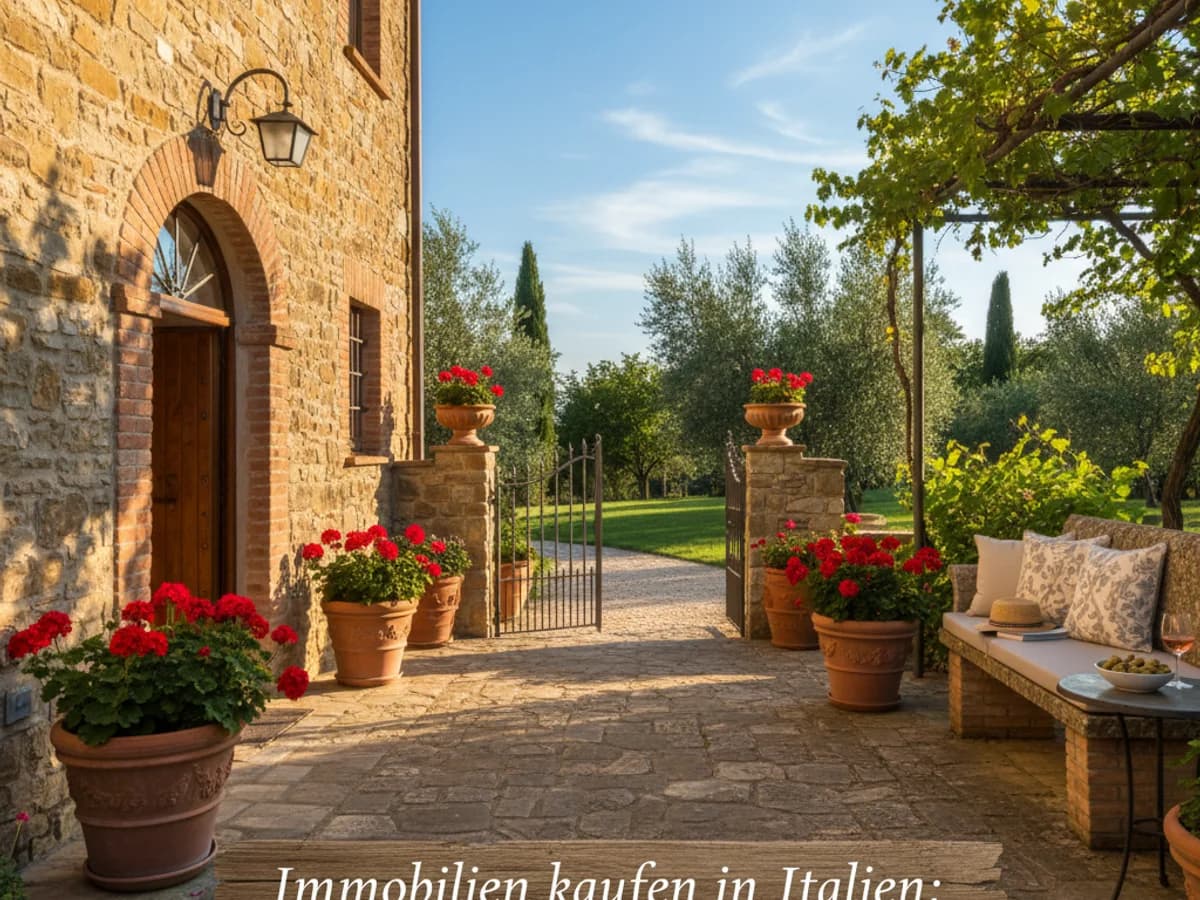

Why Buy Property in Italy?
For retirees planning a long-term life in Italy, buying property is often the most financially sound decision. Italy's real estate market, particularly in the south and inland areas, offers extraordinary value by Western European standards. A comfortable apartment or house that would cost EUR 400,000 or more in Southern France, the Spanish coast, or Portugal's Algarve can often be found for EUR 100,000-200,000 in many Italian regions.
Beyond the financial argument, owning your home in Italy provides stability, a sense of belonging, and the freedom to customize your space. Italian property law offers strong protections to owners, and the process — while different from what you may be accustomed to — is well-established and transparent.
This guide walks you through every step of the Italian property purchase process, from initial search to key handover, with specific attention to the issues that matter most to foreign retirees.
📌 Key Takeaways
- Foreigners can purchase property in Italy without restrictions (reciprocity with most countries)
- Total acquisition costs range from 8-12% above the purchase price (taxes, notary, fees)
- "Prima casa" status offers substantial tax reductions if you reside in the property
- Technical inspection by a geometra is essential to identify construction irregularities
- Assemble a professional team: real estate agent, notary, geometra and lawyer (recommended)
Can Foreigners Buy Property in Italy?
Yes. There are no restrictions on foreign nationals purchasing property in Italy, provided there is a reciprocity agreement between Italy and the buyer's country of citizenship. This reciprocity exists with virtually all major countries, including the United States, the United Kingdom, Canada, Australia, and all EU/EEA nations.
You do not need to be a resident of Italy to purchase property. However, if you intend to live in the property as your primary residence (prima casa), you will need to establish legal residence for tax purposes. Understanding the tax implications and residency requirements is crucial before making your purchase.
Step 1: Define Your Search Criteria
Before looking at properties, clarify your requirements:
Location Considerations
- Flat tax eligibility: if you plan to benefit from the 7% flat tax regime, the property must be in a municipality with fewer than 20,000 inhabitants in one of the eight qualifying southern regions (Puglia, Sicily, Sardinia, Calabria, Campania, Basilicata, Abruzzo, Molise). Learn more about Italy's 7% flat tax for retirees
- Climate: coastal vs. inland vs. mountain; consider your tolerance for summer heat and winter cold
- Healthcare proximity: distance to the nearest hospital and your ASL
- Airport access: critical if you plan to travel frequently or expect visitors
- Walkability: can you manage daily errands on foot? Many Italian towns are hilly with cobblestone streets
- Expat community: do you want to be near other English-speaking retirees, or prefer full immersion?
Property Type
- Apartment (appartamento): lower maintenance, often in town centers, may have condominium fees
- Townhouse (casa a schiera): more space, often with a terrace or small garden, common in historic centers
- Detached house (villa/casa indipendente): maximum privacy and space, but higher maintenance costs and often located outside town
- Farmhouse (casale/masseria): rural properties with land, often requiring renovation, popular in Puglia and Tuscany
- Trullo: iconic cone-roofed stone buildings unique to Puglia, often converted into charming residences
Condition
- Move-in ready (chiavi in mano): higher purchase price but no renovation costs or delays
- Light renovation needed: cosmetic updates (kitchen, bathroom, painting) — typically EUR 300-600/sqm
- Major renovation (ristrutturazione): structural work required — EUR 800-1,500/sqm or more, plus potential permitting delays
- Ruin/abandoned property: lowest purchase price but highest risk and cost. The EUR 1 house programs fall into this category
Step 2: Finding Properties
Estate Agents (Agenti Immobiliari)
In Italy, estate agents must be licensed and registered with the Camera di Commercio (Chamber of Commerce). They act as intermediaries between buyer and seller and are paid by both parties — typically 3-4% of the purchase price plus 22% VAT, charged to each side.
Working with a local agent who knows the area is invaluable, especially for understanding property history, neighborhood dynamics, and fair pricing. Ask for recommendations from other expats or your commercialista.
Online Portals
The main Italian property portals are:
- Immobiliare.it — Italy's largest property listing site
- Casa.it — major portal with extensive listings
- Idealista.it — strong in certain regions
- Gate-Away.com — specifically targets international buyers, with listings in English
Private Sales
Some properties are sold directly by owners (vendita tra privati), often advertised with "Vendesi" signs or on local Facebook groups. These avoid agency fees but require more due diligence on your part.
Auctions (Aste Giudiziarie)
Italian judicial auctions can offer properties at 20-40% below market value. These are court-ordered sales of properties seized from debtors. However, they involve complex legal procedures, properties are sold "as seen" with no warranties, and you cannot inspect interiors before bidding. This route is only advisable with experienced legal counsel.
⚠️ Warning
Judicial auctions involve significant risks: absence of warranties, inability to access interiors before sale, and complex legal procedures. Consult a specialized lawyer before participating.
Step 3: Due Diligence
Before making an offer, conduct thorough due diligence. This is where many foreign buyers make costly mistakes.
Essential Checks
- Visura catastale: a search at the Catasto (land registry) confirming the property's legal description, boundaries, ownership history, and classification
- Visura ipotecaria: a search at the Conservatoria dei Registri Immobiliari confirming there are no mortgages, liens, or encumbrances on the property
- Certificato di conformita urbanistica: verification that the property complies with local planning regulations and that all building work has been properly permitted
- Attestato di Prestazione Energetica (APE): an energy performance certificate, mandatory for all property sales. It rates the property from A4 (most efficient) to G (least efficient)
- Certificato di agibilita/abitabilita: a certificate confirming the property meets habitation standards (structural safety, sanitation, utilities)
- Condominium documentation: if buying an apartment, review the regolamento condominiale (building regulations), minutes of recent condominium meetings, and any planned or pending special assessments (spese straordinarie)
Hiring a Geometra or Architetto
A geometra (surveyor/technical expert) or architetto can conduct a technical inspection of the property, verify compliance with building regulations, identify structural issues, and assess renovation needs. Fees range from EUR 500 to EUR 2,000 depending on the complexity. This step is not legally required but is strongly recommended, especially for older properties or those requiring renovation.
Legal Representation
While not mandatory, hiring an avvocato (lawyer) specializing in real estate (diritto immobiliare) provides essential protection. The lawyer reviews all contracts, verifies ownership and encumbrances, ensures compliance with legal requirements, and represents your interests throughout the transaction. Fees typically range from EUR 1,000 to EUR 3,000.
Step 4: Making an Offer (Proposta di Acquisto)
Once you identify a property, the first formal step is a written purchase offer — the Proposta di Acquisto or Proposta Irrevocabile di Acquisto. This document includes:
- Your identification details and Codice Fiscale
- Full property description and cadastral references
- Your offered price
- Payment method and timeline
- Conditions (if any)
- An expiration date for the offer (typically 7-15 days)
The offer is usually accompanied by a deposit (caparra), typically EUR 5,000-10,000, held in escrow by the agent. If the seller accepts, the deposit becomes binding. If the seller rejects, your deposit is returned.
Important: unlike in some countries, a signed Proposta di Acquisto is legally binding in Italy. Do not sign it lightly.
Step 5: The Preliminary Contract (Compromesso)
Once the offer is accepted, buyer and seller sign a Contratto Preliminare di Compravendita, commonly called the Compromesso. This is a legally binding agreement to complete the sale and typically includes:
- Complete property description and cadastral details
- Agreed purchase price
- Payment schedule (deposit already paid plus any additional installments)
- Date for the final deed (rogito)
- Warranties by the seller (property is free of debts, compliant with regulations, etc.)
- Penalty clauses for breach
The Deposit (Caparra Confirmatoria)
At the Compromesso signing, the buyer pays a substantial deposit, typically 10-30% of the purchase price. This deposit serves a dual purpose:
- If the buyer withdraws, the seller keeps the deposit
- If the seller withdraws, the seller must return double the deposit to the buyer
This mutual penalty mechanism provides strong incentive for both parties to complete the transaction.
Registering the Compromesso
The Compromesso should be registered with the Agenzia delle Entrate within 20 days. Registration costs a fixed fee (EUR 200) plus 0.50% of the deposit amount and 3% of any other payments made (credited against the final registration tax). Registration protects the buyer against the seller selling to someone else or creditors placing liens on the property.
Step 6: The Final Deed (Rogito)
The sale is completed at the rogito — a formal signing ceremony before a notaio (notary public). In Italy, the notaio is a public official (not an advocate for either party) responsible for ensuring the legality of the transaction.
The Notaio's Role
The notaio:
- Verifies the identities of buyer and seller
- Confirms the property's legal status (ownership, encumbrances, compliance)
- Reads the entire deed aloud (in Italian)
- Ensures the buyer understands the terms (if you do not speak Italian, you must bring a certified translator or have the deed bilingual)
- Collects all applicable taxes and fees
- Registers the transfer with the Catasto and the Conservatoria
- Files the deed with the Archivio Notarile
What to Bring to the Rogito
- Valid passport or national ID
- Codice Fiscale
- Permesso di Soggiorno (if non-EU)
- Bank drafts (assegni circolari) for the balance of the purchase price — personal checks are not accepted
- Proof of payment for all taxes and fees
- A certified interpreter if you do not speak fluent Italian
Payment of the Purchase Price
The balance of the purchase price (minus the deposits already paid) is paid at the rogito by bank draft (assegno circolare) or bank transfer. The notaio verifies receipt before completing the transaction.
Costs and Taxes
Purchase Taxes
The tax treatment depends on whether the property is your primary residence (prima casa) and whether you are buying from a private individual or a developer/company.
Buying from a private individual (most common for resale properties)
| Tax | Prima Casa | Second Home |
|---|---|---|
| Imposta di Registro (registration tax) | 2% of cadastral value | 9% of cadastral value |
| Imposta Ipotecaria (mortgage tax) | EUR 50 (fixed) | EUR 50 (fixed) |
| Imposta Catastale (cadastral tax) | EUR 50 (fixed) | EUR 50 (fixed) |
The cadastral value (valore catastale) is calculated by multiplying the property's rendita catastale (a value assigned by the Catasto, usually much lower than market value) by a coefficient (115.5 for prima casa, 126 for other properties). This means the actual taxes paid are significantly lower than the percentages suggest.
Buying from a developer (new construction or recently renovated)
| Tax | Prima Casa | Second Home |
|---|---|---|
| VAT (IVA) | 4% of purchase price | 10% of purchase price |
| Imposta di Registro | EUR 200 (fixed) | EUR 200 (fixed) |
| Imposta Ipotecaria | EUR 200 (fixed) | EUR 200 (fixed) |
| Imposta Catastale | EUR 200 (fixed) | EUR 200 (fixed) |
Prima Casa Requirements
To qualify for prima casa tax rates, you must:
- Not own another property in the same municipality
- Establish residence in the municipality within 18 months of purchase
- Not own another property in Italy purchased with prima casa benefits (or sell it within one year)
For retirees planning to live in the property, prima casa status is the norm and provides substantial savings.
💡 Good to know
"Prima casa" status can save you thousands of euros in registration taxes. Make sure you meet the requirements before signing the deed and consider registering with the municipal registry within 18 months of purchase to retain these tax benefits.
Other Purchase Costs
- Notaio fees: 1-2.5% of the declared value, depending on complexity. Minimum approximately EUR 2,000
- Estate agent commission: 3-4% plus 22% VAT (charged to buyer)
- Geometra/surveyor fees: EUR 500-2,000
- Legal fees: EUR 1,000-3,000 (if hiring a lawyer)
- Certified translation (for the deed): EUR 300-800
Total Acquisition Cost Example
For a EUR 150,000 property purchased as prima casa from a private seller:
| Cost | Amount |
|---|---|
| Purchase price | EUR 150,000 |
| Registration tax (2% of cadastral value, est.) | EUR 1,500-3,000 |
| Notaio fees | EUR 2,500-3,500 |
| Agent commission (3% + VAT) | EUR 5,490 |
| Surveyor | EUR 1,000 |
| Legal fees | EUR 1,500 |
| Miscellaneous | EUR 500 |
| Total additional costs | EUR 12,490-15,490 |
| Grand total | EUR 162,490-165,490 |
Budget approximately 8-12% above the purchase price for total acquisition costs.
Ongoing Property Costs
Annual Taxes
- IMU (Imposta Municipale Unica): annual property tax. Exempt for prima casa (unless classified as luxury category A/1, A/8, A/9). For second homes, rates range from 0.76% to 1.06% of cadastral value, set by each municipality
- TARI (Tassa sui Rifiuti): waste collection tax, based on property size and number of occupants. Typically EUR 150-400/year
Condominium Fees
If your property is part of a condominium (condominio), you will pay monthly or quarterly fees covering shared expenses: building insurance, cleaning of common areas, elevator maintenance, lighting, and any special assessments for major repairs. Typical range: EUR 50-200/month.
Maintenance
Budget EUR 1,000-3,000/year for ongoing maintenance of a typical apartment or small house. Older properties and detached houses with gardens require more.
Utilities
For detailed utility costs, consult our guide to cost of living in Italy for retirees. For a 2-bedroom apartment: EUR 150-300/month depending on region and season.
Renovation: What to Know
Building Permits
Any structural work, changes to the building's exterior, or modifications to the floor plan require permits from the local Comune. The type of permit depends on the scope of work:
- CILA (Comunicazione Inizio Lavori Asseverata): for minor internal works (non-structural)
- SCIA (Segnalazione Certificata di Inizio Attivita): for significant non-structural modifications
- Permesso di Costruire: for major structural work, new construction, or changes to the building's external appearance
Your geometra or architetto will handle the permitting process.
Tax Incentives for Renovation
Italy offers generous tax deductions for property renovation:
- Bonus Ristrutturazione: 50% tax deduction on renovation costs up to EUR 96,000 per property unit, spread over 10 years
- Ecobonus: 65% deduction for energy-efficiency improvements (insulation, heat pumps, solar panels, high-efficiency windows)
- Bonus Mobili: 50% deduction on furniture and appliance purchases for renovated properties, up to EUR 8,000
These deductions are applied against your Italian income tax liability. If you are on the 7% flat tax regime, note that the deduction applies only to Italian-source income taxed at ordinary rates, not to the flat tax portion. Consult your commercialista to understand the practical benefit.
Typical Renovation Costs (2026)
- Light cosmetic renovation (painting, new fixtures): EUR 200-400/sqm
- Full renovation (new kitchen, bathrooms, flooring, electrical): EUR 600-1,000/sqm
- Structural renovation (roof, walls, foundations): EUR 1,000-1,500/sqm
- Luxury finish: EUR 1,500-2,500/sqm
A full renovation of an 80-square-meter apartment typically costs EUR 50,000-80,000.
Common Pitfalls for Foreign Buyers
Abusi Edilizi (Building Irregularities)
One of the most significant risks in Italian real estate is purchasing a property with unresolved building irregularities — modifications made without proper permits. These must be regularized (condono or sanatoria) before the sale can legally proceed. The notaio should verify this, but additional checks by your geometra provide extra security.
Underestimating Renovation Timelines
Italian construction projects routinely take 30-50% longer than initially quoted. Factor this into your planning, especially if you are renovating before moving in.
Not Using a Geometra
Skipping the technical inspection to save EUR 1,000-2,000 is a false economy. Structural issues, undisclosed irregularities, or asbestos (present in many buildings constructed before 1992) can cost tens of thousands to remediate.
Currency and Transfer Issues
If your funds are in a non-euro currency, plan your transfers carefully. Large currency transfers through banks can incur unfavorable exchange rates and high fees. Specialized services like Wise (formerly TransferWise), OFX, or CurrencyFair typically offer better rates. Start the process early — international transfers can take 2-5 business days.
Emotional Purchasing
Italy is seductive. The combination of a beautiful view, a charming town, and an affordable price can lead to impulsive decisions. Always visit the property and area in different seasons, check the practicalities (parking, noise, flooding risk, summer tourism overload), and take time before committing.
Conclusion
Buying property in Italy is a rewarding process that, with proper preparation and professional support, is straightforward and transparent. The key is assembling the right team — a trustworthy agent, a thorough geometra, a competent notaio, and ideally a lawyer — and conducting exhaustive due diligence before committing. Italy's real estate market offers exceptional value for retirees, and owning your own home provides both financial benefits (no rent, potential appreciation) and an irreplaceable sense of belonging in your adopted community.
Frequently Asked Questions
Can I buy property in Italy as a foreigner?
Yes, absolutely. There are no restrictions on foreign nationals purchasing property in Italy, provided there is a reciprocity agreement between Italy and your country of citizenship. This agreement exists with virtually all major countries (United States, United Kingdom, Canada, Australia, and all EU/EEA countries). You do not need to be a resident of Italy to purchase, but if you plan to live in the property as your primary residence, you will need to establish your legal residence for tax purposes.
How much does buying property in Italy actually cost after taxes and fees?
Beyond the purchase price, budget approximately 8-12% in additional costs. These include registration taxes (2-9% depending on prima casa status), notary fees (1-2.5% of value), real estate agent commission (3-4% plus 22% VAT), geometra fees (EUR 500-2,000), and legal fees (EUR 1,000-3,000). For a EUR 150,000 prima casa property, budget approximately EUR 162,500-165,500 total.
What is the role of the notary (notaio) in the purchase process?
The notary is a public official who oversees the entire final transaction. Their responsibilities include verifying buyer and seller identities, confirming the property's legal status (ownership, encumbrances, compliance), reading the deed in full (in Italian), ensuring you understand the terms, collecting all applicable taxes and fees, and registering the transfer with the Catasto and Conservatoria. The notary is not an advocate for either party — they are a neutral official.
What are "abusi edilizi" and why are they important?
Abusi edilizi are building irregularities — modifications made without proper permits. This is one of the most significant risks for foreign buyers. Before finalizing the purchase, these irregularities must be regularized (condono or sanatoria). The notary should verify this, but having the property inspected by an independent geometra provides additional protection and can identify issues the notary might miss.
What difference does "prima casa" status make on taxes?
Prima casa (primary residence) status offers substantial tax benefits. Registration tax drops from 9% to 2% of cadastral value (typically much lower than market value). You are also exempt from IMU (annual property tax). To qualify for prima casa status, you must not own another property in the same municipality and establish residence in the municipality within 18 months of purchase.
Do I absolutely need to hire a lawyer to buy property?
While not legally mandatory, hiring a lawyer (avvocato) specializing in real estate is strongly recommended. The lawyer will review all contracts, verify ownership and encumbrances, ensure compliance with legal requirements, and represent your interests throughout the transaction. Fees typically range from EUR 1,000 to EUR 3,000 — a small insurance considering the transaction value and potential risks for foreign buyers.
How long does the purchase process take in Italy?
Generally, the complete process (from offer to final signing) takes 2-4 months. After your offer is accepted, the compromesso (preliminary contract) is signed, followed by a period of approximately 4-8 weeks before the rogito (final deed). This timeframe allows the notary to verify all documents, taxes to be paid, and preliminary registration to be completed. Timelines can be longer if a thorough technical inspection reveals issues or if irregular building permits need to be regularized.